
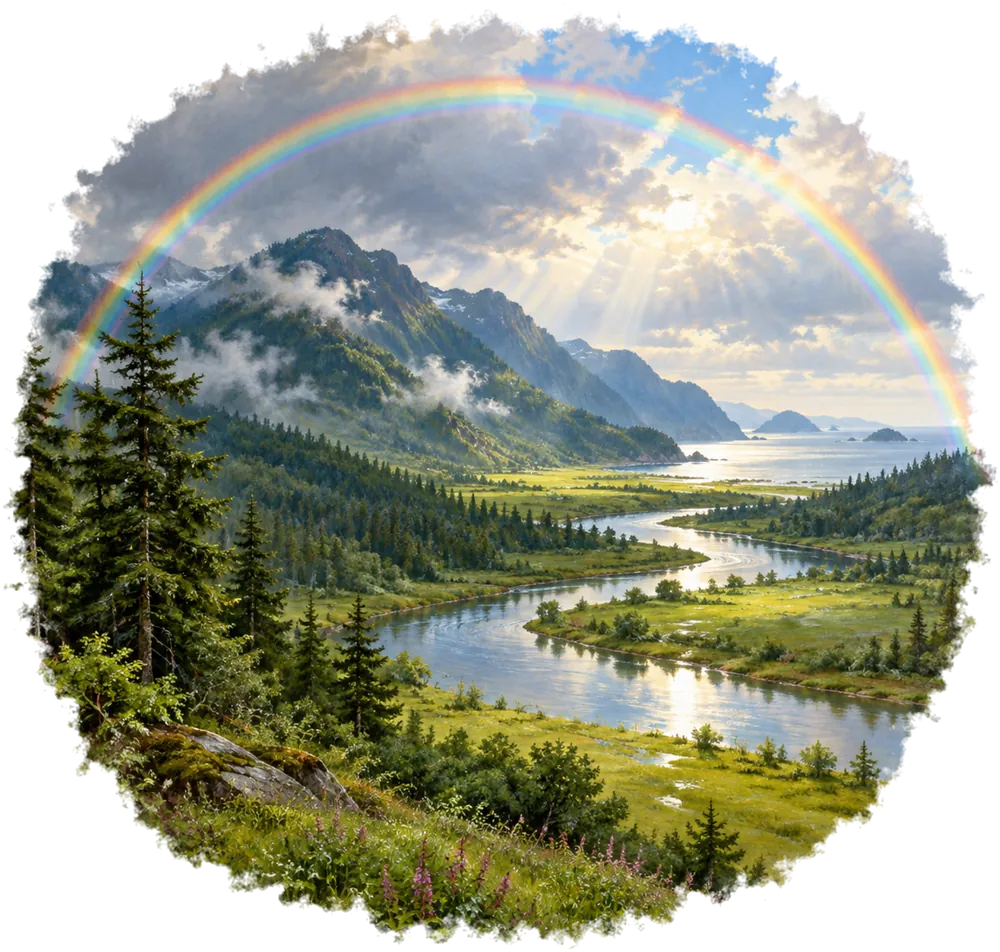
An ecotone is the zone where two ecosystems meet and blend, like the edge where forest becomes meadow or where a river runs into the sea. Edges like these are often richer in life than either side, and at Ecotone Academy the word names a life between chapters: the unsettled ground where an old way of being is ending and the next one hasn’t arrived yet.
Where the word comes from
Ecotone joins two Greek roots: oikos, home, and tonos, tension. A home under tension. Ecologists use it for any borderland between two habitats: a salt marsh between land and sea, the timberline where forest thins into alpine meadow, the bank of a river, the hedgerow at the edge of a field.
Some ecotones are sharp, like the line where a lawn meets a forest. Others stretch for miles, like the slow change from prairie to woodland. Either way the conditions are mixed: a little of this world, a little of that one, and plenty that belongs to neither.
Why edges teem with life
Edges tend to hold more kinds of life than the habitats on either side. Species from both worlds overlap there, and some live only at the edge. Ecologists call this the edge effect. An estuary, where fresh water meets salt, is among the most productive places on Earth.
The same mixing that makes an edge fertile also makes it unstable. Tides come and go. Fire clears ground. Nothing stays put for long. That isn’t a flaw in the ecotone. It’s how the ecotone works.
Your life as an ecotone
A breakup, a loss, a new career, a move, a calling you can’t ignore. Each one puts you on the edge between two habitats. The old landmarks are gone, the new ones aren’t up yet, and it’s easy to decide that something is wrong with you.
Seen as an ecotone, the instability is part of the terrain. A part of you may be grieving what’s ending while another part is already curious about what’s next. Both belong here. The edge is often where the most new life grows.
Ecotone Academy is built around that idea. Its invitation is simple: make friends with change.
Twelve kinds of edge
Not every crossing feels the same. The free Ecotone Assessment places you in one of twelve landscapes, each a mirror for a different kind of life change, with one small experiment to try.
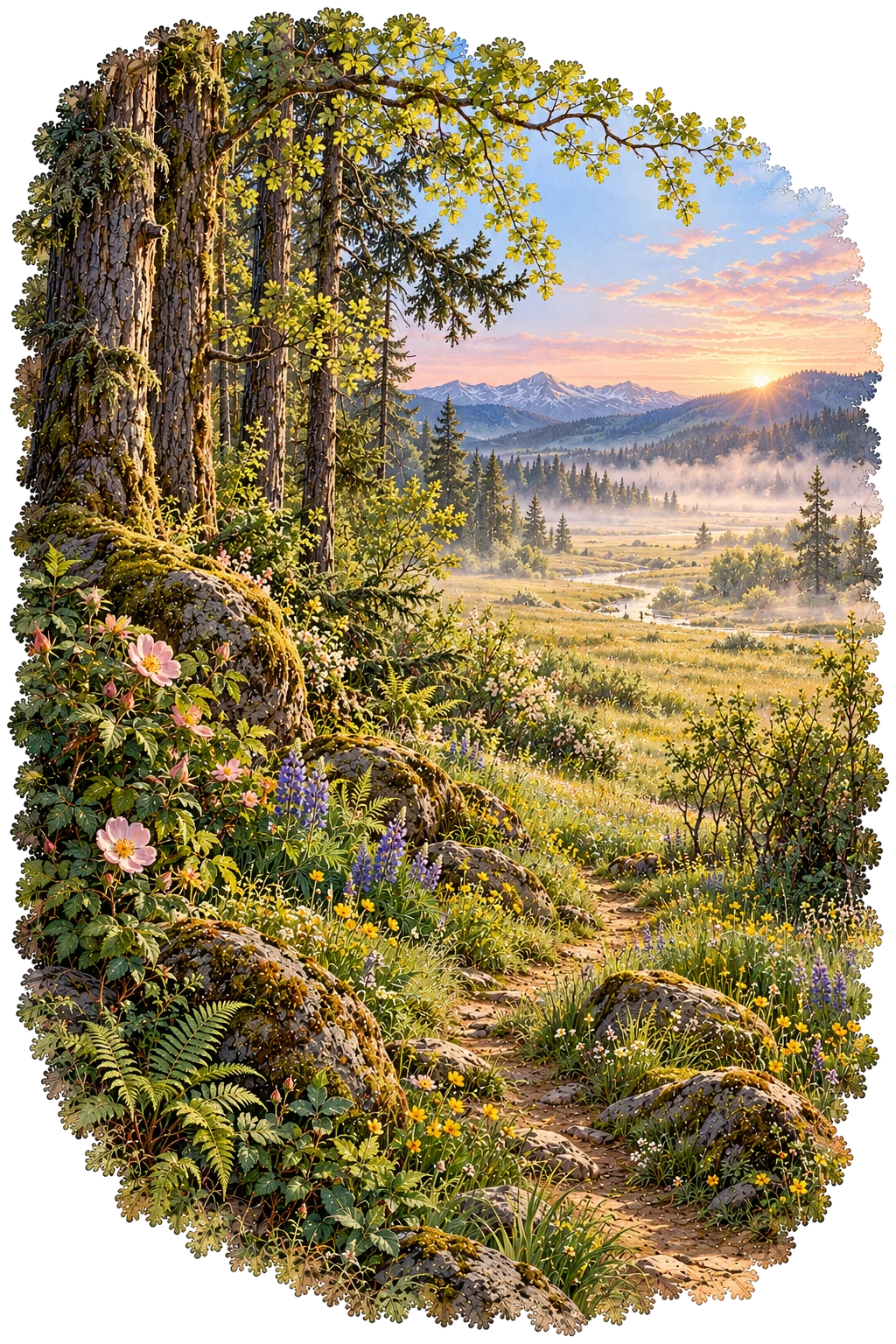 Begin
Meadow Edge
A larger world is opening.
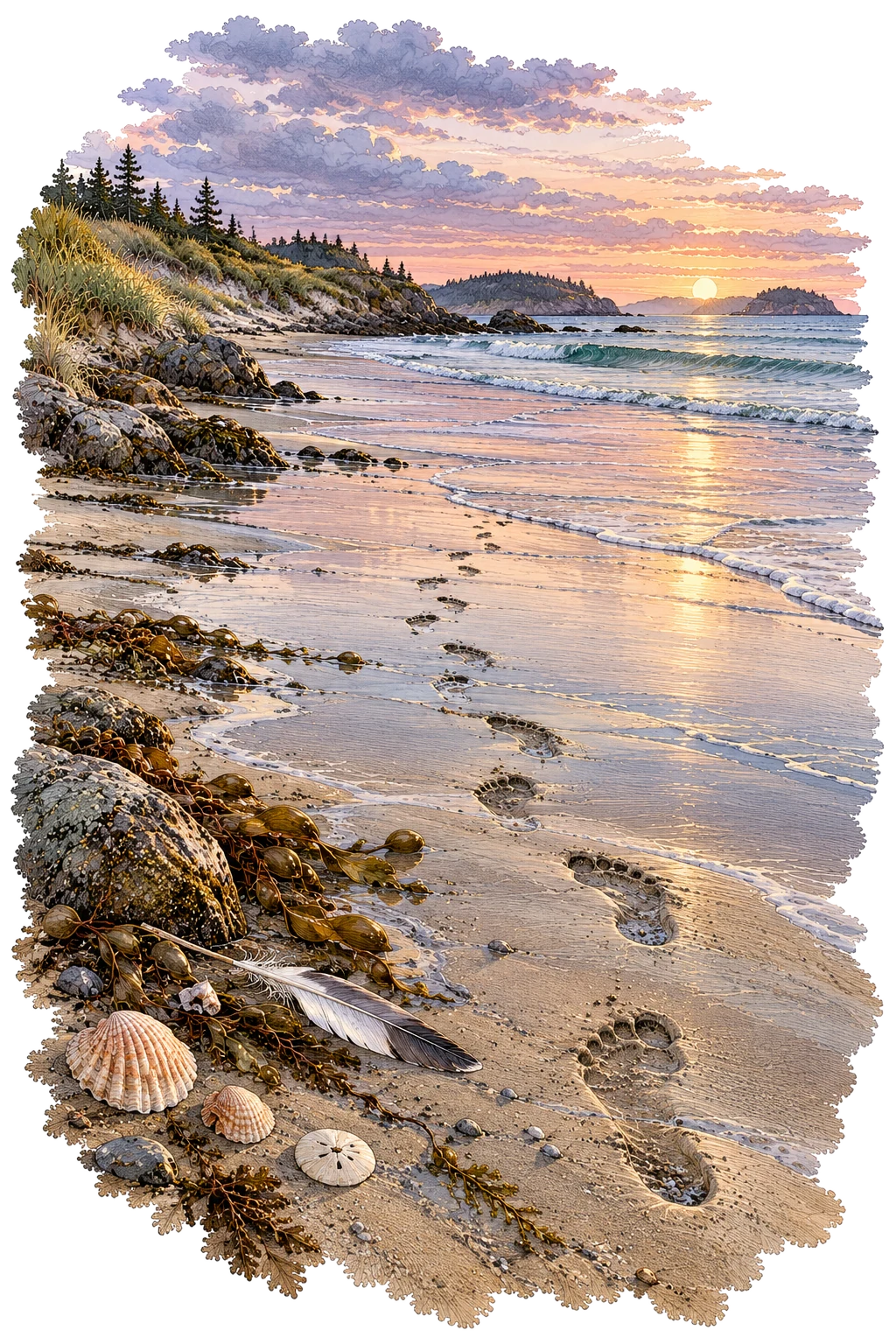 Release
Shoreline
Something meaningful is ending, receding, or being released.
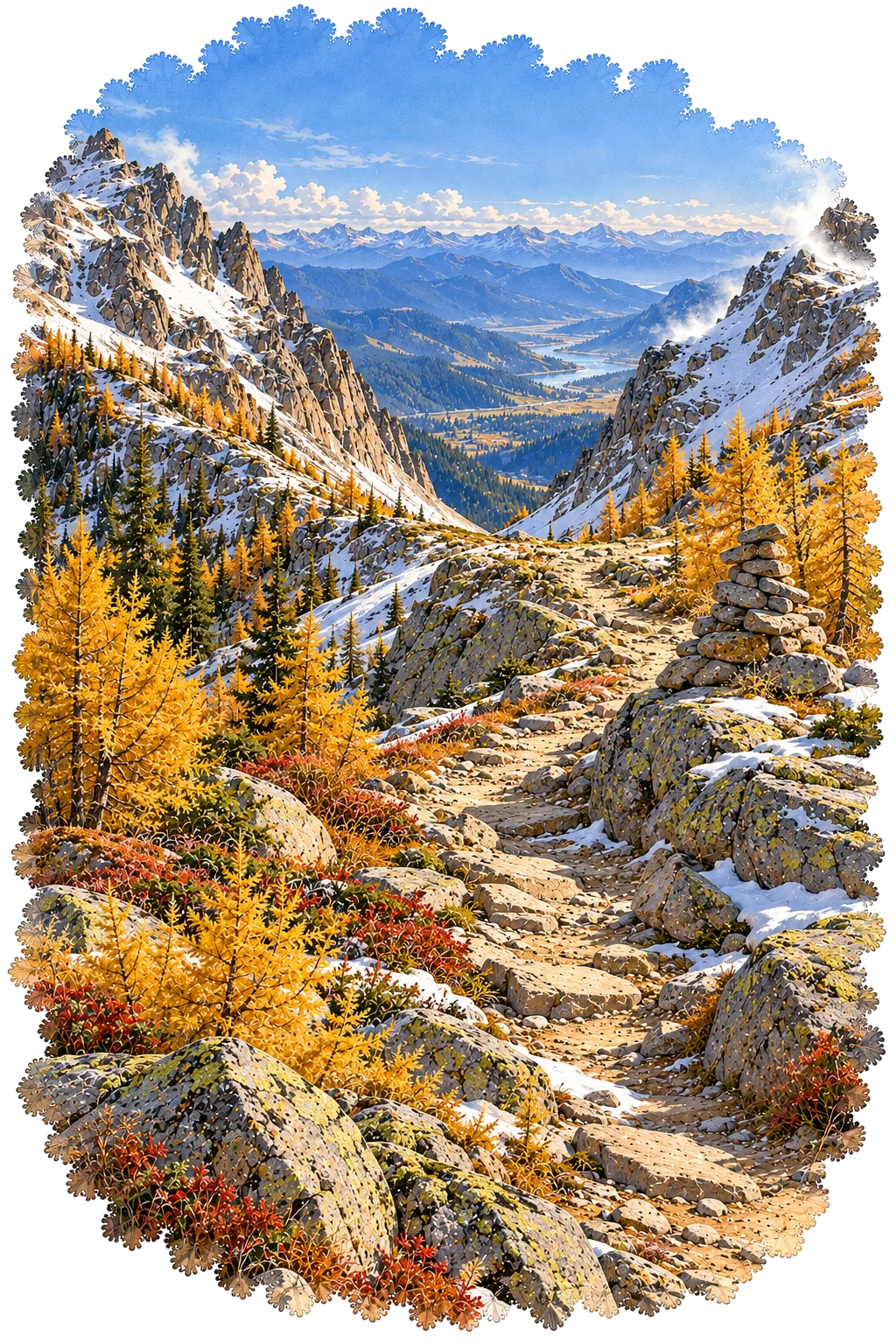 Cross
Mountain Pass
You are actively leaving one ecosystem for another.
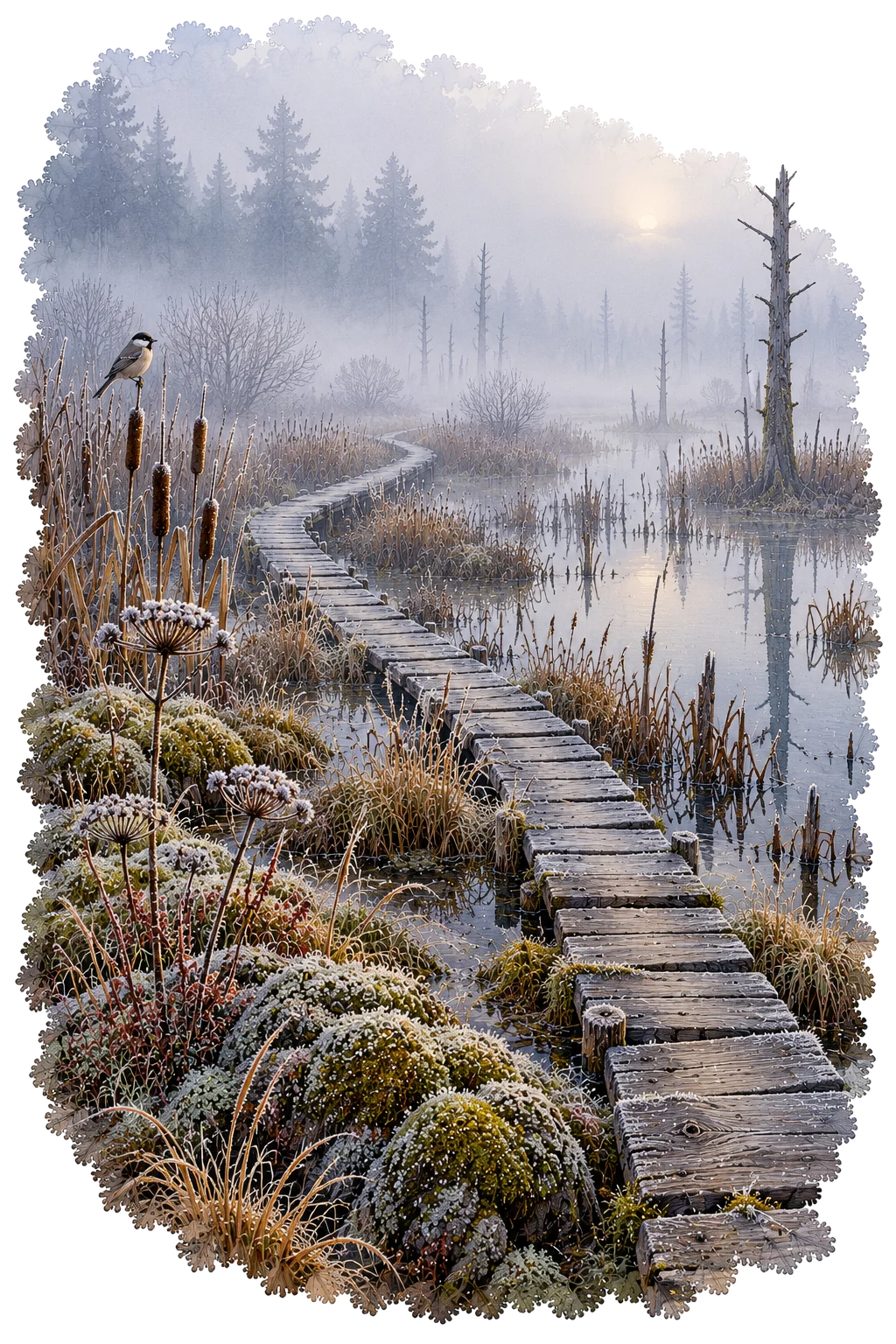 Sense
Foggy Marsh
The old map no longer works and the next path is unclear.
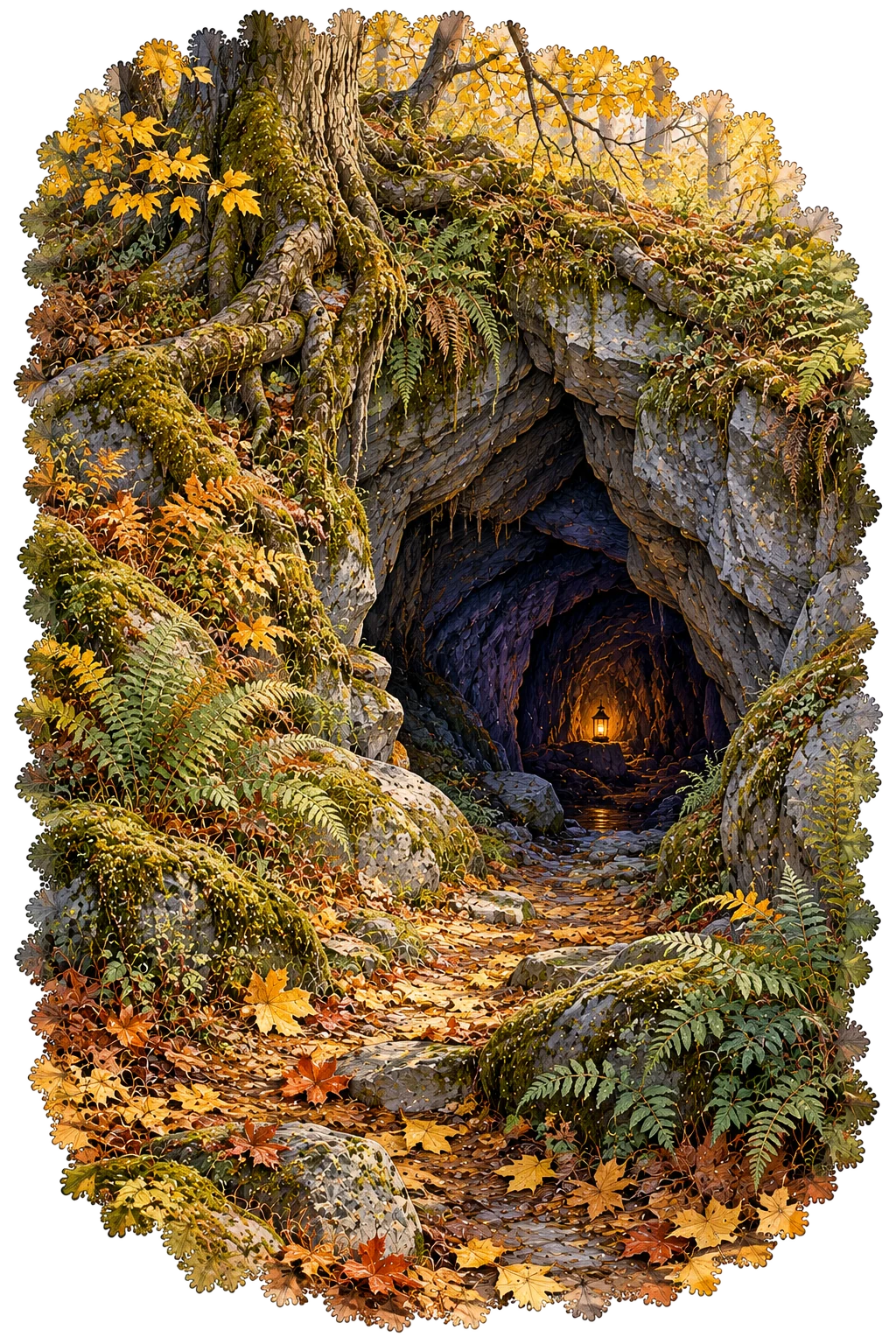 Meet
Cave Mouth
Moving forward requires going inward and facing something deeper.
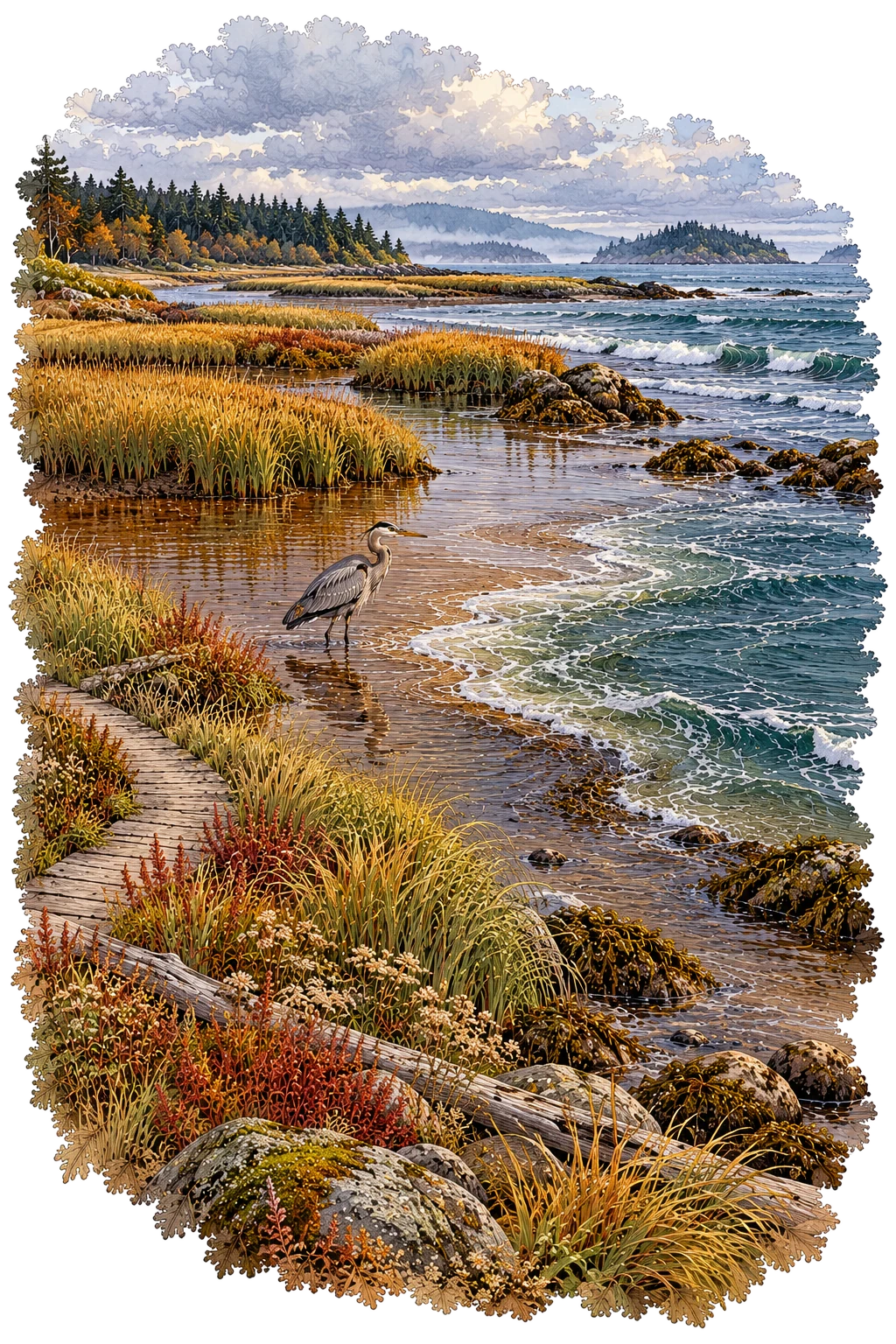 Discern
Estuary
Two identities, roles, values, or worlds are meeting.
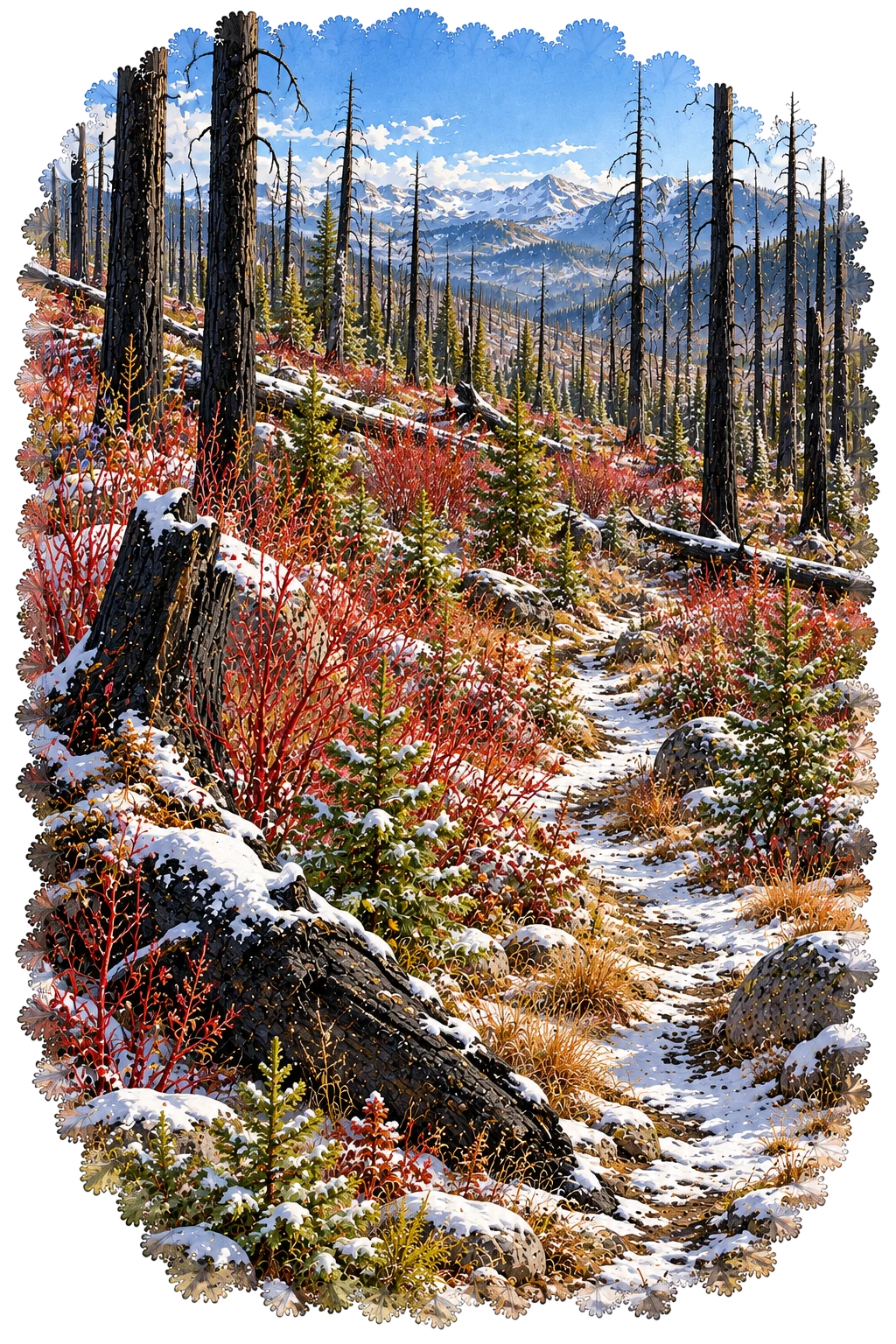 Rebuild
Burn Scar
The previous structure has been disrupted and something new must grow.
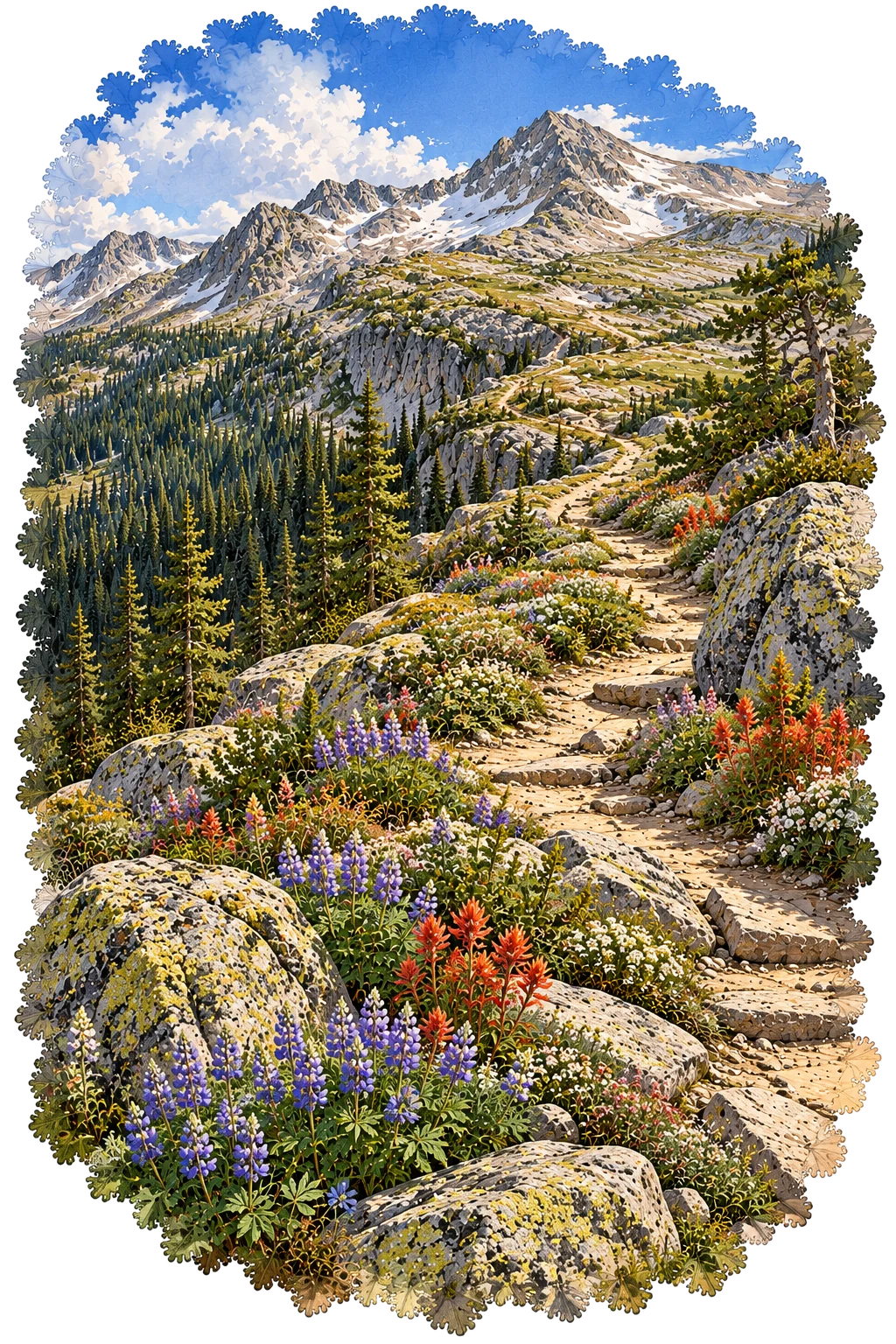 Shed
Timberline
You have outgrown the ecosystem that previously supported you.
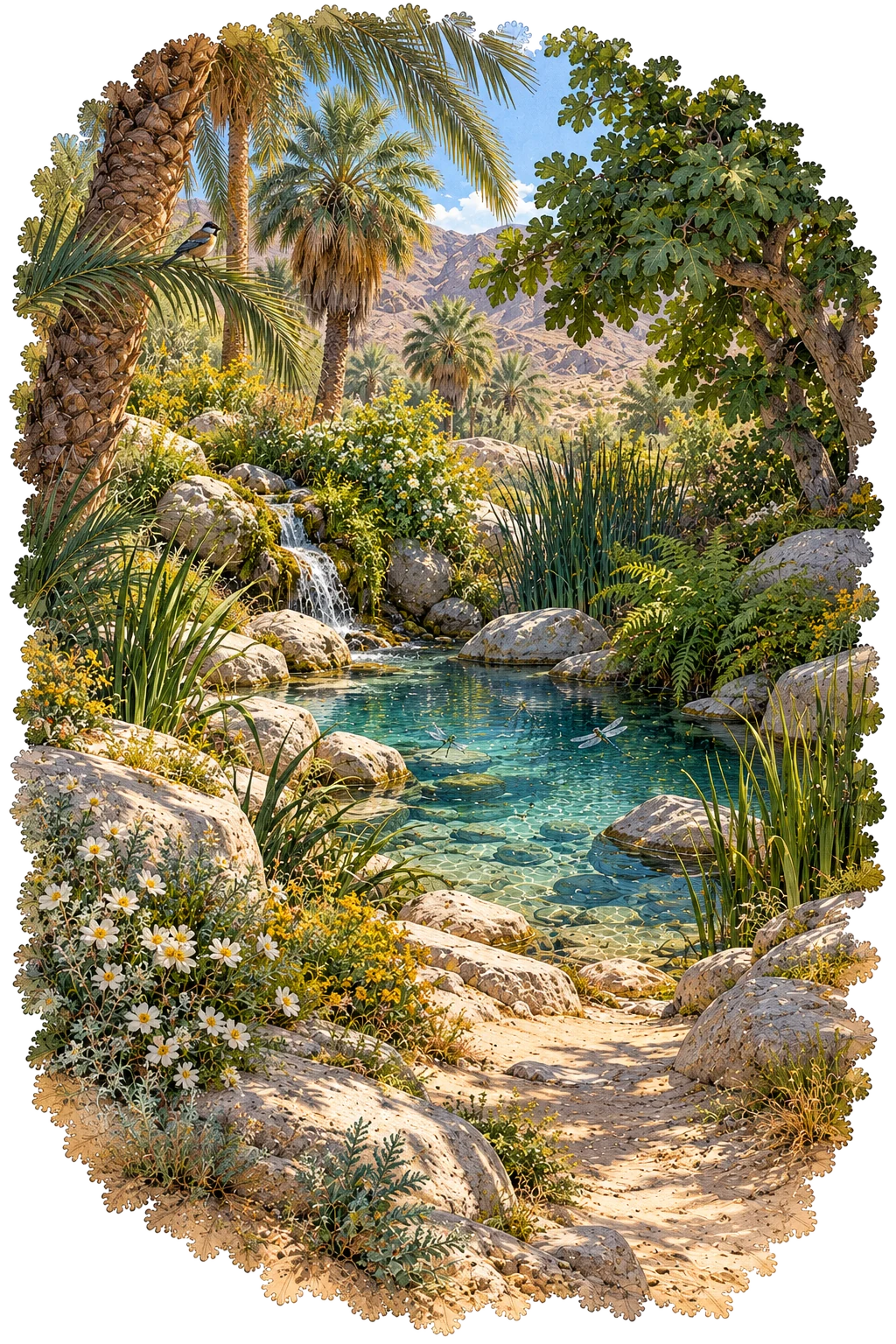 Restore
Oasis
Your system needs replenishment before further movement.
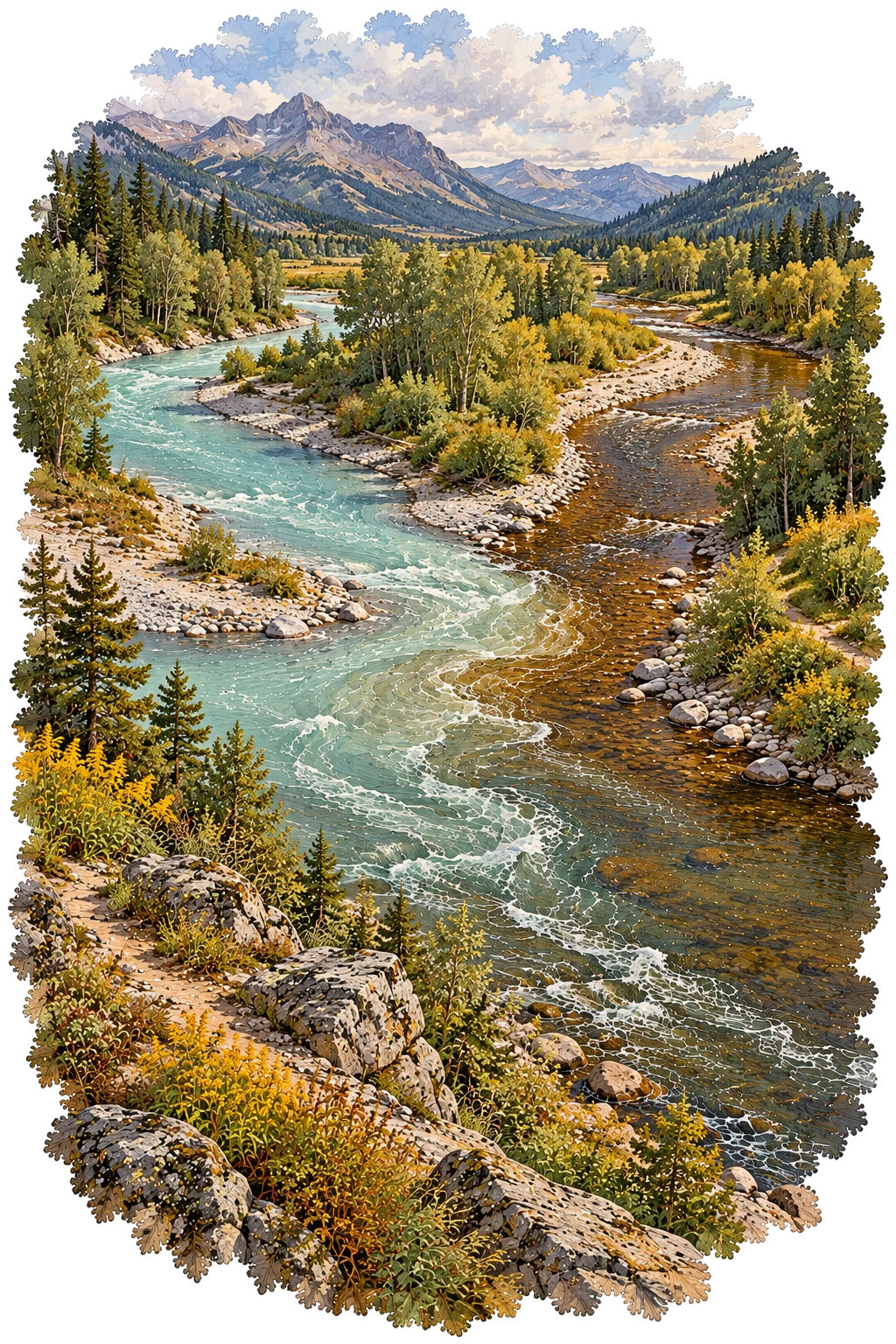 Integrate
Confluence
Previously separate streams are becoming one coherent life.
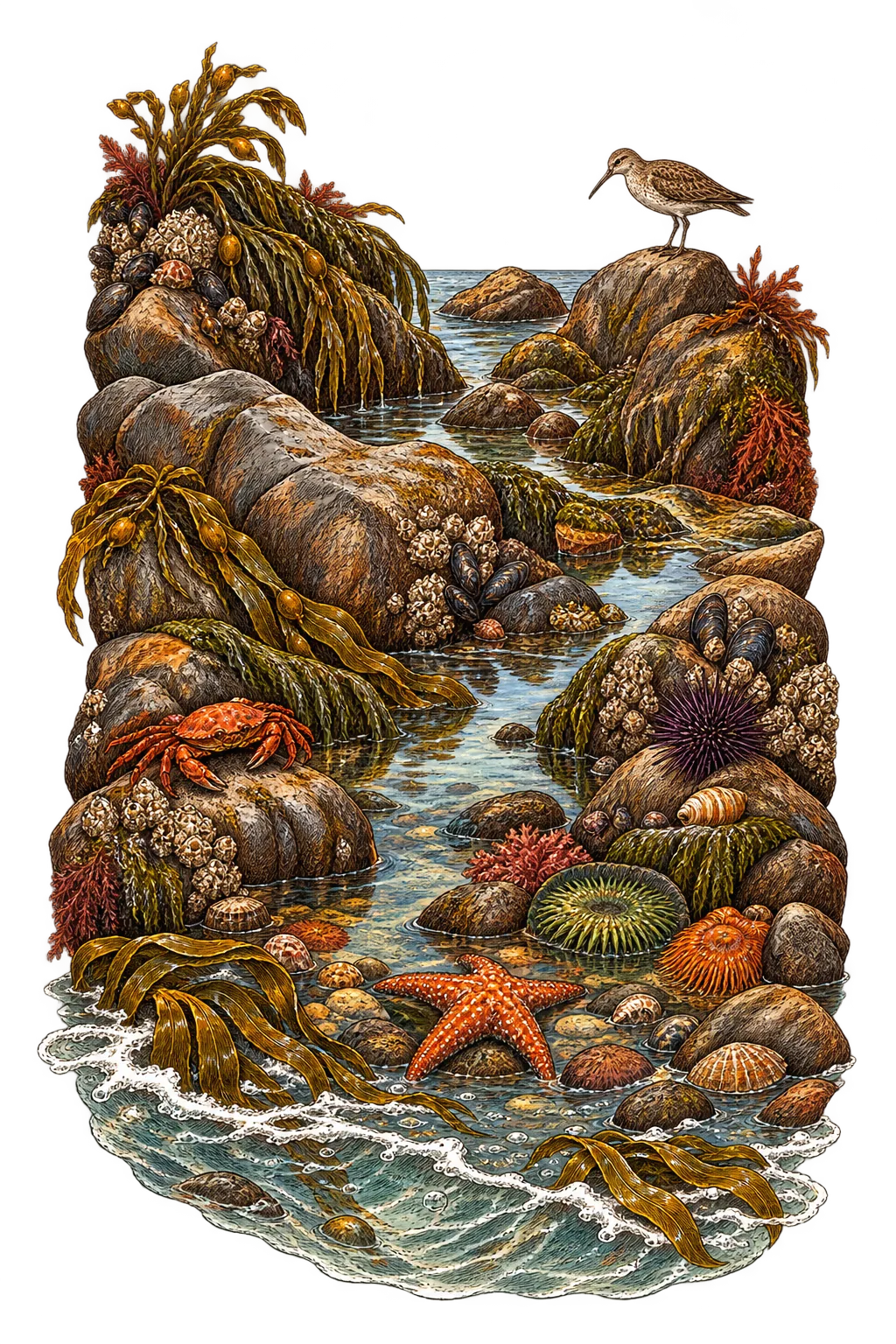 Renegotiate
Tidal Zone
You repeatedly move between old and new ecosystems.
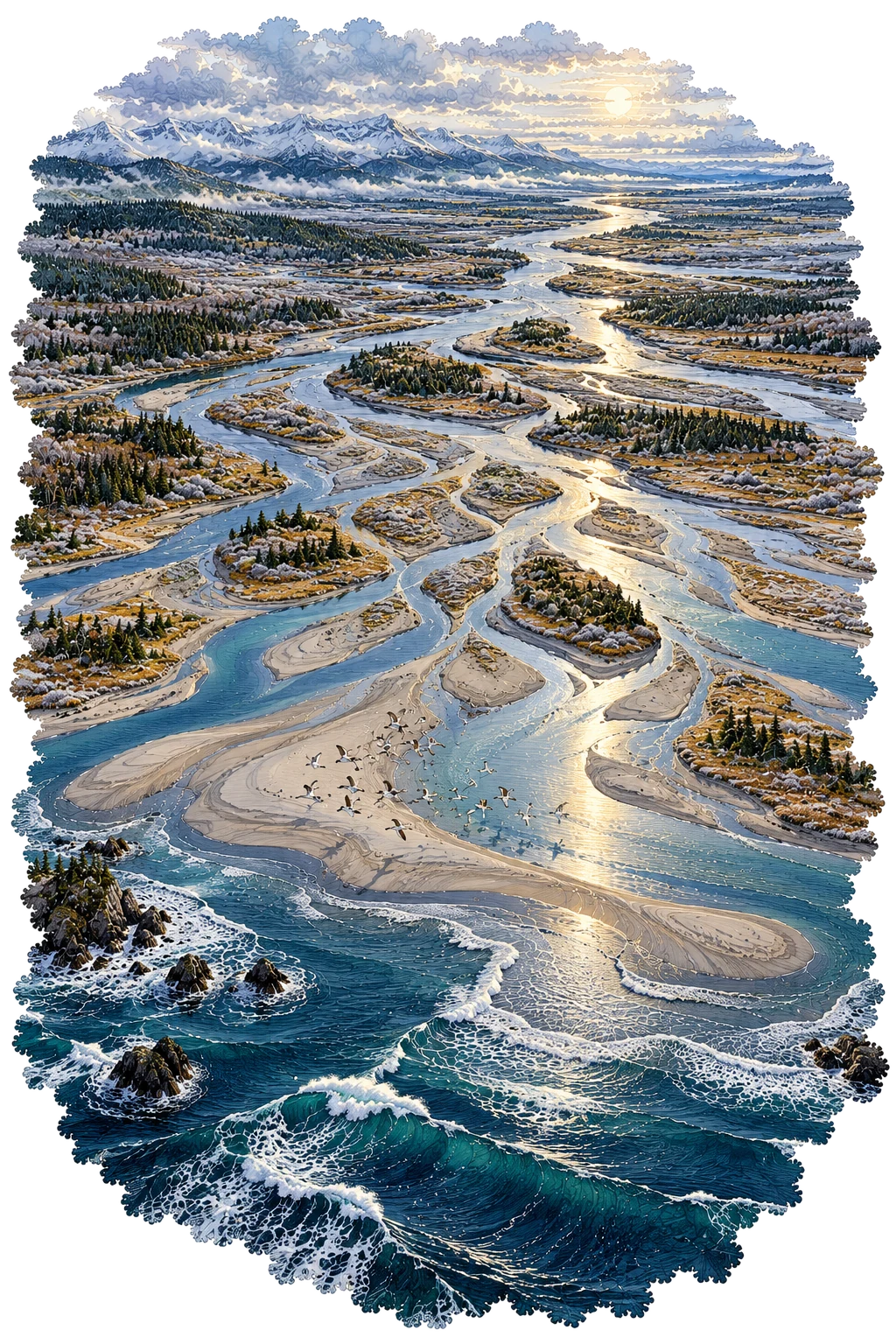 Give
Delta
Your transformation is beginning to flow outward.
Three ways to be with an edge
Small experiments, safe to try on your own. Take what helps and leave the rest.
- Sit where two worlds meet
Find a shoreline, a forest edge or the border of a field, and sit for twenty minutes. Notice what lives there that lives nowhere else. Then ask what is living at your own edge right now.
- Let the fog shrink the horizon
When the next step is unclear, stop forcing a distant answer. For a week, note what gives you energy and what quietly drains it. Follow the pattern, not the loudest opinion.
- Name both sides
Write down what is ending and what is arriving. You don’t have to choose between them yet. An ecotone holds both.
Questions people ask
What is an ecotone in simple terms?
An ecotone is the zone where two ecosystems meet and blend, like forest and grassland, or a river and the sea. It holds a mix of both, and often life found nowhere else.
What is the edge effect?
The edge effect is the tendency for more kinds of life to gather where two habitats meet, because species from both sides overlap there and some live only at the edge.
What are some examples of ecotones?
Estuaries, salt marshes, mangroves, riverbanks, lakeshores, forest edges, hedgerows and the timberline on a mountain are all ecotones.
What is the difference between an ecotone and an ecosystem?
An ecosystem is a community of living things together with its surroundings, like a forest or a lake. An ecotone is the transition zone where two ecosystems meet.
What does it mean to be in an ecotone in life?
It means you are between chapters: an old way of being is ending and the next one hasn’t fully arrived. At Ecotone Academy, that in-between is treated as fertile ground, not a problem to fix.
Why is it called Ecotone Academy?
Because a life between chapters works like an ecotone. Telfer founded Ecotone Academy for people crossing that edge, starting with a free assessment that names the kind of change you are in.
Keep exploring
- Your planetary chapter: what a dasha is, and why timing matters in a transition.
- The Threshold Book: a book of about 100 pages written for your crossing.
- Meet Telfer: the wilderness quest that became the map.